On Your Own Terms: The Solo Woman's Guide to Adventuring in the Rocky Mountains
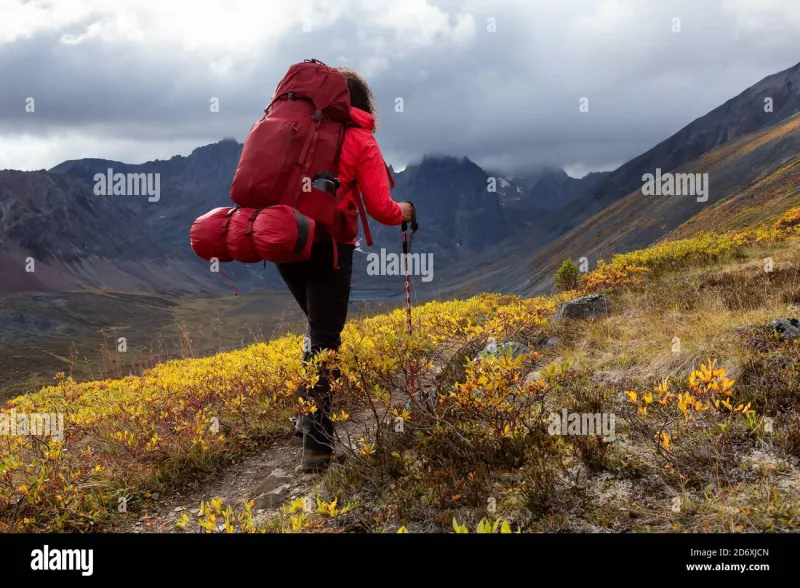
Photo: woman solo hiking Rocky Mountains backcountry trail backpack, via c8.alamy.com
Let's get something out of the way first: the most common question women get when they say they're hiking solo isn't "Which trail are you taking?" or "How many nights?" It's "Is that safe?" — usually delivered with a slight head tilt.
The short answer is yes, with preparation. The longer answer is that tens of thousands of women hike, backpack, and explore the Rocky Mountains solo every single year, and the vast majority of them come back not just unharmed, but genuinely transformed. Fear is a reasonable starting point. It's just not a reason to stay home.
This guide is for every woman who's been curious about heading out alone — whether you're a seasoned hiker finally ready to ditch the group, or a first-timer who just bought her first pair of trail runners and has no idea where to start.
Why Women Are Hitting the Backcountry Solo
The numbers don't lie: solo female hiking has grown steadily over the last decade, and the Rockies are a major destination for this community. Instagram accounts, blogs, and hiking groups dedicated to women outdoors have built real networks of support and route information.
But why go alone in the first place? Ask women who do it regularly, and a few themes come up consistently.
"You move at your own pace," says Marisol, a 34-year-old from Denver who's completed solo sections of the Colorado Trail. "No one is waiting on you. No one is rushing you. You stop when you want to stop and you push when you want to push. It's the first time I've ever really listened to my own body on trail."
There's also the confidence factor. Navigating by yourself, solving problems without backup, setting up camp in the dark — these experiences build a kind of self-assurance that's hard to manufacture anywhere else. The Rockies, with their scale and occasional hostility, have a way of showing you what you're actually made of.
Practical Safety: What Actually Matters
Safety planning for solo hiking is important for everyone, but women face some specific considerations worth addressing directly.
Tell someone your plan — every single time. Leave a detailed itinerary with a trusted person: your trailhead, your intended route, your campsite location, and your expected return time. Be specific. "I'm hiking in Rocky Mountain National Park" is not enough. "I'm parking at Bear Lake, hiking to Flattop Mountain, camping at the backcountry site near Ptarmigan Lake, and I'll be back at my car by 4 p.m. Sunday" is.
Navigation skills are non-negotiable. Download offline maps on an app like Gaia GPS or CalTopo before you leave cell range. Carry a physical map and compass and know how to use them. Don't rely solely on your phone. Batteries die; maps don't.
Invest in a satellite communicator. Devices like the Garmin inReach Mini allow you to send and receive messages and trigger an SOS signal anywhere on the planet — no cell service required. For solo travel in the Rockies, this is arguably the single most important piece of gear you can own. The annual subscription is worth every penny.
Trust your gut, loudly. If a situation on trail feels off — a person who's too persistent, a campsite that feels wrong, a vibe you can't quite name — act on it. Move on. Change your plans. Solo hiking gives you the freedom to make those calls without negotiating with anyone else. Use it.
Bear safety is real, not theoretical. Carry bear spray, know how to deploy it, and keep it accessible — clipped to your hip belt, not buried in your pack. Store food and scented items properly using a bear canister or provided food storage boxes. The Rockies have healthy black bear and grizzly populations (grizzlies primarily in Wyoming, Montana, and Idaho). Review current wildlife advisories for your specific area before you go.
Gear Adjustments for Solo Travel
When you're alone, redundancy matters more. A few tweaks to your standard kit:
- First aid kit: Go beyond the basics. Include a SAM splint, blister care, and an emergency whistle. Take a Wilderness First Aid course — even the one-day version will change how you think about backcountry emergencies.
- Shelter: Carry a lightweight emergency bivy in addition to your tent. If you get injured and can't make camp before dark, that extra layer of protection could be critical.
- Headlamp: Bring two. A dead headlamp while setting up camp solo is both genuinely dangerous and deeply annoying.
- Water filtration: Don't rely on a single method. Carry a filter like a Sawyer Squeeze and iodine tablets as backup.
Trail Recommendations: Where to Start
If you're building your solo confidence, start with trails that are well-trafficked, well-marked, and close to trailheads before graduating to more remote routes.
For beginners:
- Bear Lake Loop, Rocky Mountain National Park, CO — 0.8 miles, paved, stunning alpine scenery, almost always other hikers around.
- Emerald Lake Trail, Rocky Mountain National Park, CO — 3.5 miles round trip, manageable elevation gain, spectacular payoff.
For intermediate hikers:
- Glacier Gorge Trail to Mills Lake, CO — 5.4 miles round trip. Enough solitude to feel genuinely alone, enough foot traffic for peace of mind.
- Taggart and Bradley Lakes Loop, Grand Teton National Park, WY — 5.9 miles with excellent Teton views and manageable terrain.
For experienced backcountry travelers:
- Indian Peaks Wilderness, CO — Multiple overnight options with permits. The Pawnee Pass Trail to Pawnee Lake offers dramatic alpine scenery and a genuine sense of remoteness.
- Wind River Range, WY — The Winds are considered one of the last truly wild places in the lower 48. The Elkhart Park to Big Sandy trailhead section draws serious backpackers from around the country. Go prepared, go informed, and go knowing you'll likely have long stretches of trail entirely to yourself.
The Psychological Piece Nobody Talks About Enough
Solo adventure has a particular effect on the mind that's hard to explain until you've experienced it. The noise of daily life — the pinging notifications, the competing demands, the background hum of other people's expectations — goes quiet in a way that doesn't happen anywhere else.
Many women describe their first solo overnight as a turning point. Not because anything dramatic happened, but because nothing did. They set up their tent, cooked their dinner, watched the stars come out, and realized they were completely fine. More than fine.
"I'd spent years assuming I needed someone else there to feel safe," says Priya, a 41-year-old from Boulder who now leads women's backpacking workshops. "That first night alone in the backcountry, I realized I'd been wrong the whole time. The mountains didn't care who I was out there with. They just wanted me to pay attention."
Paying attention is, maybe, the whole point. When you're alone, you notice more. The way a marmot watches you from a boulder. The exact moment the light shifts from white to gold. The sound of your own breathing evening out as the miles accumulate.
You Belong Out There
The Rocky Mountains are not a gendered space. They're not reserved for the loudest, the strongest, or the most experienced. They're for anyone willing to show up, do the work of preparation, and step onto the trail with honest respect for the terrain.
If you've been waiting for permission, consider this it. Go alone. Go prepared. Go on your own terms.
The range is waiting.