Beyond the Groomed Run: A Serious Guide to Rocky Mountain Backcountry Winter Adventure
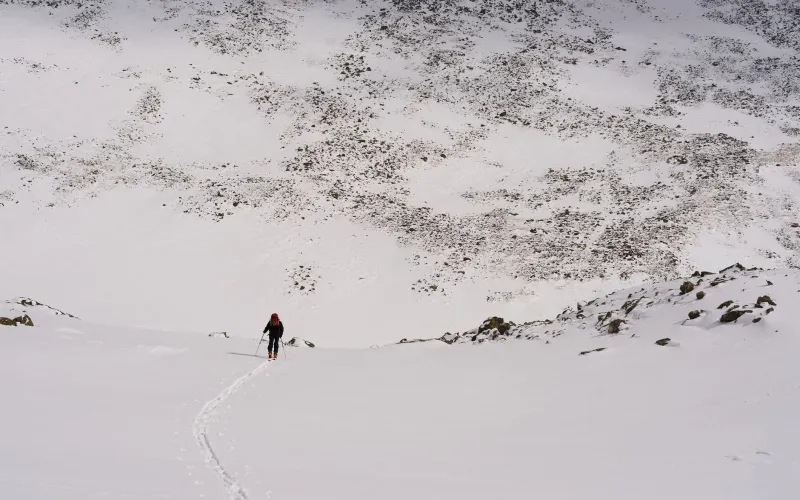
There's a moment, maybe a half mile past the last trail marker, when the only sound is your own breathing and the soft compression of snow under your skis or snowshoes. No lift lines. No music from the lodge. No voices. Just the creak of cold timber, a wind-scoured ridge, and an expanse of untracked white that feels like it belongs to you alone.
That's the Rocky Mountain backcountry in winter. And for those willing to prepare seriously for it, it's one of the most profound outdoor experiences in North America.
This isn't a guide for beginners. If you're brand new to winter travel, start with guided snowshoe tours and avalanche awareness courses before venturing out solo. But if you've got solid winter hiking experience, know your gear, and are ready to push into more serious terrain, read on. The backcountry is calling.
Understanding the Avalanche Landscape—Before Everything Else
Let's be direct: avalanches kill people in the Rocky Mountain backcountry every single year. Colorado alone consistently ranks as one of the deadliest states in the country for avalanche fatalities. This isn't meant to scare you off—it's meant to make sure you take avalanche education as seriously as the terrain demands.
The Colorado Avalanche Information Center (CAIC) and the Utah Avalanche Center both publish daily forecasts that are essential reading before any backcountry outing. Check them religiously. Understand the difference between danger ratings—"Low" through "Extreme"—and know that "Considerable" (Level 3) is when most avalanche fatalities occur, precisely because it feels manageable.
Take an avalanche rescue course before you go. The American Institute for Avalanche Research and Education (AIARE) offers Level 1 courses across Colorado, Utah, Wyoming, and Montana throughout the winter season. In two days, you'll learn to read terrain, understand snowpack, and practice the rescue sequence that could save a partner's life.
Every person in your group should carry—and know how to use—the essential avalanche safety kit:
- Avalanche transceiver (beacon): Worn on your body, not in your pack. Switch to transmit before you leave the car.
- Probe: A collapsible pole used to locate a buried victim precisely.
- Shovel: Metal blade, not plastic. You're moving compacted snow, not powder.
Know how to read terrain features that indicate avalanche risk: convex rolls, lee slopes where wind deposits extra snow, terrain traps like gullies and cliff bands below slopes, and recently wind-loaded aspects. If a slope looks loaded and you're not sure, go around it. The powder will still be there next weekend.
Gear That Actually Matters in the Winter Backcountry
Backcountry winter gear is a world unto itself, and the choices you make directly affect your safety and comfort. Here's what experienced Rocky Mountain winter travelers rely on:
For Backcountry Skiing
AT (Alpine Touring) or telemark setups with skins for the uphill and releasable bindings for the descent are the standard. Splitboards are the backcountry equivalent for snowboarders. Avoid snowshoes-plus-alpine-ski combos—they're awkward and inefficient.
Layer aggressively: a moisture-wicking base layer, a midlayer fleece or light down, and a hardshell outer layer that blocks wind and sheds snow. You'll overheat on the climb and cool down fast on the descent or at rest. Dress for the descent, not the ascent.
For Snowshoeing
Modern aluminum-frame snowshoes with aggressive crampons underfoot handle most Rocky Mountain terrain well. Trekking poles are non-negotiable—they provide stability on sidehills and critical balance on icy traverses. Gaiters keep snow out of your boots on deep days.
Navigation Tools
Don't rely solely on your phone. Carry a dedicated GPS device loaded with topo maps of your area, and bring a paper map and compass as backup. In winter, trails disappear under snow, landmarks look different, and whiteout conditions can disorient even experienced travelers in minutes.
A personal locator beacon (PLB) or satellite communicator like a Garmin inReach is worth every penny. In terrain with no cell service—which is most of the backcountry—it's your only lifeline in a genuine emergency.
Choosing Your Terrain Wisely
Not all backcountry is equal. The Rockies offer everything from mellow Nordic touring through forested valleys to serious couloir skiing that demands technical mountaineering skills. Know where you fall on that spectrum and be honest about it.
For those new to backcountry travel, some excellent lower-consequence starting points include:
- Brainard Lake Recreation Area, Colorado — Well-marked summer trails that translate to excellent winter snowshoe terrain, with stunning Indian Peaks views and a relatively forgiving landscape.
- Rendezvous Mountain Meadows, Wyoming — Accessible from Teton Village, offering backcountry snowshoe routes through open meadows with big mountain views and relatively moderate avalanche exposure.
- Turquoise Lake, Colorado — Near Leadville, with wide forested terrain and a network of ungroomed routes that stay relatively protected.
As your skills develop, you can push into more committing terrain. But earn your way there—don't skip steps.
The Mental Game Nobody Talks About
Physical fitness and gear are only part of what the winter backcountry demands. The psychological component is real and often underestimated.
Winter travel is slower, harder, and more exhausting than summer hiking. The cold drains energy even when you're not moving. Navigation is more cognitively demanding when trails are buried. Decision-making under fatigue—particularly around avalanche terrain—requires a disciplined mental framework that doesn't bend to peer pressure, summit fever, or the sunk-cost fallacy of "we've already come this far."
Develop a habit of honest group check-ins. How is everyone feeling? Are we all comfortable with this slope? Is the weather holding? The best backcountry travelers are those who turn around without drama when conditions aren't right—and who find just as much satisfaction in a safe, smart decision as in a summit.
Solitude in winter has a particular quality to it. It's quieter than summer silence. The mountains feel less forgiving and more honest. Many experienced backcountry travelers describe it as the most clarifying experience they know—a space where distraction falls away and the present moment is all there is.
But that clarity comes with responsibility. The winter backcountry doesn't care about your schedule or your Instagram plans. It operates on its own terms, and the best thing you can do is respect that completely.
Start Right, Go Far
If you're ready to commit to the preparation—the avalanche course, the gear investment, the honest self-assessment—the Rocky Mountain backcountry in winter will reward you in ways that are genuinely hard to describe to someone who hasn't been there.
Find a course, find a mentor, find a partner who's been out there before. Build your skills methodically. And when you finally stand on a wind-scoured ridge above a valley full of untracked snow, with nothing but mountains in every direction, you'll understand exactly why people keep coming back.