Train High, Perform Higher: How Rocky Mountain Elevation Can Supercharge Your Fitness
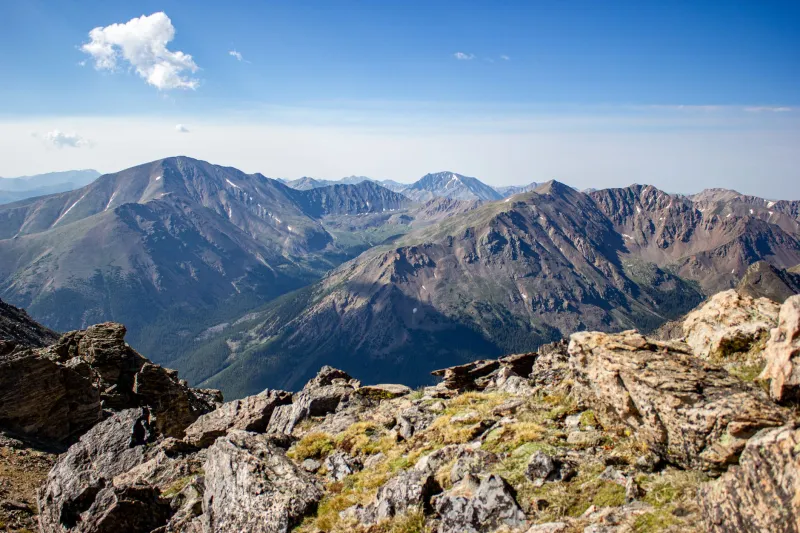
You've probably heard endurance athletes talk about "going to altitude" like it's some kind of secret weapon. Turns out, they're not wrong. The Rocky Mountains—with elevations ranging from around 5,000 feet in gateway cities like Denver all the way past 14,000 feet on the state's famous Fourteeners—offer one of the most accessible natural training environments on the planet. And if you play your cards right, a trip to the Rockies can pay fitness dividends for weeks after you've unpacked your bags.
Why Thin Air Makes You Stronger
Here's the short version of the science: at high altitude, the air contains the same percentage of oxygen as at sea level (about 21%), but the lower atmospheric pressure means each breath delivers fewer oxygen molecules to your lungs. Your body reads this as an oxygen deficit and responds by ramping up production of erythropoietin (EPO)—a hormone that signals your bone marrow to crank out more red blood cells.
More red blood cells means more oxygen-carrying capacity. When you return to sea level, you bring that upgraded cardiovascular system with you. For a period of weeks, your body is essentially operating with a performance edge—delivering oxygen to muscles more efficiently than it did before your trip.
This is the principle behind "live high, train low" protocols used by Olympic runners, cyclists, and triathletes. But here's the thing: you don't need to be an Olympian to benefit from it.
The Sweet Spot: Which Elevations Actually Work
Not all altitude is created equal when it comes to training adaptation. Sports physiologists generally agree that meaningful hematological changes—the kind that actually improve performance—begin at around 6,500 to 7,000 feet. Below that, the stimulus is too mild. Above 10,000 feet, many athletes find that workout quality suffers too much because the body is working so hard just to function.
For most visitors looking to combine genuine training with enjoying the Rockies, towns like Breckenridge, Colorado (9,600 feet), Steamboat Springs (6,700 feet), and Jackson, Wyoming (6,200 feet) sit right in the productive range. You can run, bike, or hike at a real training intensity without completely destroying yourself in the process.
If you want to push higher—say, attempting a summit hike up Quandary Peak or one of the San Juan Fourteeners—treat those as aerobic adventures rather than structured training sessions. The experience is worth every labored breath, but don't expect to hold your usual pace.
How Long Do You Need to Stay?
This is the question every athlete asks, and the honest answer is: it depends on your goal.
For a meaningful boost in red blood cell production, most research points to a minimum of three weeks at elevation. That's the threshold at which EPO-driven adaptations become significant enough to translate into measurable sea-level performance gains. A two-week trip will still trigger some adaptation—and you'll feel the difference when you get home—but the gains are more modest.
There's also an important caveat: the first few days at altitude are often rough. Headaches, fatigue, disrupted sleep, and reduced exercise capacity are all normal as your body adjusts. Many athletes actually perform worse during days two through five before things start to click. Don't panic, stay hydrated, ease into your workouts, and give your body time to do its thing.
If you're planning a shorter trip—say, five to seven days—you may actually experience better training quality in the days immediately before full acclimatization kicks in. Some coaches recommend arriving, doing your hardest sessions in days one and two before the altitude fatigue sets in, then tapering as the week goes on. It's not textbook altitude training, but it can work.
Real Athletes, Real Results
Talk to enough endurance athletes and you'll hear the same story over and over: the Rockies changed something.
Sarah Henley, a competitive masters marathon runner from Atlanta, started spending two weeks each summer near Salida, Colorado—elevation around 7,000 feet—three years ago. "The first time I came back home and went for a run, I genuinely thought my GPS watch was broken," she says. "My pace was faster than it had been in years and my heart rate was lower. It was wild."
Mike Torres, a cyclist who competes in gravel races across the Southwest, uses a cabin near Durango as a training base every July. "I come out here for the riding, but I stay for what it does to my engine," he says. "Two weeks at 7,500 feet and I come home with legs that just don't quit."
Neither of them has a coach or a structured altitude protocol. They're just showing up, doing the work, and letting the mountains do the rest.
Practical Tips for Getting the Most Out of Your Rocky Mountain Training Trip
Hydrate like it's your job. Altitude increases respiratory water loss significantly. Aim to drink more than you think you need, and limit alcohol—especially in the first few days.
Slow down on purpose. Your ego will want to maintain sea-level paces. Don't. Effort-based training (using perceived exertion or heart rate rather than pace) is the right approach at elevation. The adaptations happen whether you're running fast or not.
Sleep at a slightly lower elevation if you can. The classic altitude training model is "live high, train low," but even sleeping a few hundred feet lower than where you train can improve sleep quality. If your training base is Breckenridge, consider sleeping in Frisco (9,100 feet) instead.
Give yourself a buffer. Don't schedule your first hard workout the day you arrive. Give your body 48 hours to begin adjusting before you push it.
Plan your return strategically. The performance window after returning to sea level is roughly two to four weeks. If you're training for a specific race or event, timing your Rockies trip to end two to three weeks before competition day is ideal.
The Rockies as Your Training Partner
There's something almost poetic about the fact that one of America's most breathtaking landscapes is also one of its best performance labs. Whether you're chasing a marathon PR, trying to crush your local cycling club on Saturday mornings, or just want to build a stronger cardiovascular base, the Rocky Mountains are ready to push you in ways a gym simply can't.
Book the trip. Do the work. And when you get home and your running buddies start asking what you've been doing differently, you can just smile and say you went to the mountains for a while.